Feeling unusually tired for weeks can be easy to explain away. Maybe you’ve been sleeping poorly, working too much, or simply having a stressful month. But when fatigue keeps returning—or you begin noticing weakness, dizziness, shortness of breath, headaches, or difficulty concentrating—it may be worth looking beyond your daily routine.
One possible explanation is iron-deficiency anemia, a condition that develops when your body doesn’t have enough iron to make the hemoglobin needed to carry oxygen through your blood. And while diet, heavy menstrual bleeding, pregnancy, and problems absorbing iron can all contribute, there is another cause that deserves careful attention in adults: gastrointestinal bleeding.
The tricky part is that GI bleeding isn’t always obvious. You don’t necessarily see blood in the toilet or on toilet paper. A small amount of bleeding from the digestive tract can occur gradually and remain hidden in the stool. Over time, that ongoing blood loss may deplete your iron stores and eventually lead to anemia.
Important Note
Iron-deficiency anemia isn’t always caused by what you eat, and taking an iron supplement doesn’t necessarily address the underlying problem. In some adults, particularly men and postmenopausal women, unexplained iron deficiency can be a sign of blood loss somewhere in the digestive tract. Understanding why your iron is low is often just as important as replacing it.
Table of Contents
- What Is Iron-Deficiency Anemia?
- How Can GI Bleeding Cause Iron-Deficiency Anemia?
- Can You Have GI Bleeding Without Seeing Blood?
- What Digestive Conditions Can Cause Hidden Blood Loss?
- What Does Iron-Deficiency Anemia Feel Like?
- Who Should Be Evaluated for Possible GI Blood Loss?
- How Is Iron-Deficiency Anemia Diagnosed?
- Why Might You Need an Endoscopy or Colonoscopy?
- Important Note
- When Should You Worry About Anemia?
- How Is Iron-Deficiency Anemia From GI Bleeding Treated?
- Can GI-Related Iron-Deficiency Anemia Be Prevented?
- GI Evaluation for Anemia in Tomball, TX
- Frequently Asked Questions
- Medical Disclaimer
What Is Iron-Deficiency Anemia?
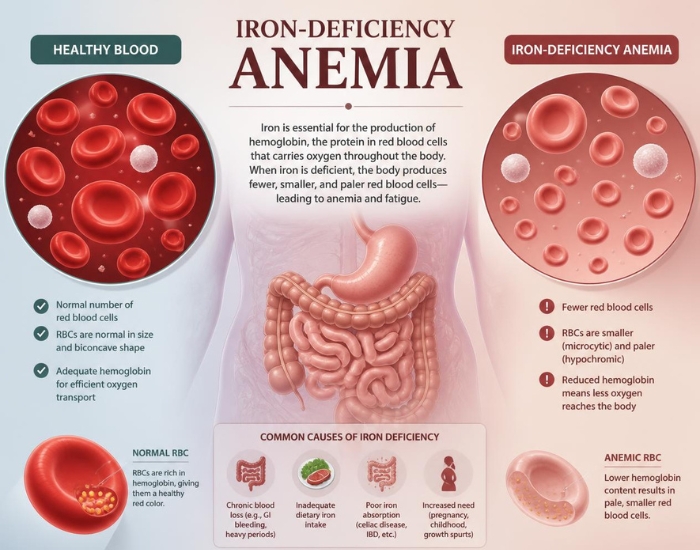
Iron-deficiency anemia occurs when your body doesn’t have enough iron to produce adequate hemoglobin. Hemoglobin is the protein inside red blood cells responsible for carrying oxygen from your lungs to the rest of your body.
When iron levels fall far enough, your body may produce fewer red blood cells or red blood cells that don’t function as effectively. As oxygen delivery becomes less efficient, symptoms can gradually appear.
This explains why anemia doesn’t always feel dramatic at first. You might simply feel more tired than usual. You may find yourself needing breaks during activities that previously felt easy. Some people notice that climbing stairs leaves them more winded than expected, while others describe feeling mentally “foggy” or having trouble concentrating.
As anemia becomes more pronounced, symptoms may include:
- Persistent fatigue or low energy
- Weakness
- Dizziness or lightheadedness
- Headaches
- Shortness of breath, especially with exertion
- Heart palpitations or a noticeable heartbeat
- Pale-looking skin
- Cold hands or feet
- Difficulty concentrating
Some people with significant iron deficiency also develop unusual cravings for nonfood substances, a condition called pica. Brittle nails or changes in the tongue can occur as well.
Importantly, these symptoms aren’t specific to iron-deficiency anemia. Fatigue, weakness, and shortness of breath can have many causes. That’s why blood testing is necessary to determine whether anemia or iron deficiency is actually present.
Iron Deficiency and Anemia Are Not Exactly the Same Thing
It’s also possible to have depleted iron stores before developing full anemia. In other words, your iron levels may begin falling while your hemoglobin remains within the normal range.
This distinction matters because the underlying cause of iron depletion still needs to be considered. If your body is continually losing small amounts of blood, simply waiting until anemia develops can delay diagnosis of the source.
How Can GI Bleeding Cause Iron-Deficiency Anemia?
The digestive tract contains a large network of blood vessels, and bleeding can occur anywhere from the esophagus and stomach to the small intestine, colon, rectum, or anus. When bleeding is obvious, you may see blood in vomit or stool. But gastrointestinal bleeding can also be slow and microscopic.
When small amounts of blood are lost repeatedly, your body’s iron stores can gradually become depleted. At first, your body may compensate by using stored iron. Eventually, however, those reserves can run low.
Once iron stores are significantly depleted, your bone marrow may not have enough iron available to produce healthy hemoglobin. That’s when iron-deficiency anemia can develop.
This is why unexplained iron-deficiency anemia sometimes prompts a gastroenterology evaluation. The goal isn’t to assume that GI bleeding is the cause. Rather, the goal is to determine whether blood loss from the digestive tract could explain the iron deficiency and, if so, identify where that blood loss is occurring.
Depending on your age, sex, medical history, symptoms, medications, and risk factors, your physician may evaluate both the upper and lower gastrointestinal tract.
Can You Have GI Bleeding Without Seeing Blood?
Yes. This is one of the most important things to understand about iron-deficiency anemia and gastrointestinal bleeding.
Not all GI bleeding is visible. Slow bleeding may occur in quantities too small to noticeably change the appearance of your stool. You may have no obvious blood on the toilet paper, no red toilet water, and no dramatic change in your bowel movements.
Instead, the first clue may be a routine blood test showing that your hemoglobin is low or that your iron stores have fallen.
This type of bleeding is sometimes called occult GI bleeding, meaning the blood isn’t readily visible. A person can feel generally well while the process continues quietly in the background.
That doesn’t mean every case of iron deficiency is caused by occult GI bleeding. Far from it. Menstrual blood loss, insufficient dietary iron, pregnancy, blood donation, certain medications, and problems with intestinal absorption are among the other possible explanations.
The important question is: Why is this person’s iron low?
Answering that question requires looking at the whole picture rather than assuming that one cause applies to everyone.

What Digestive Conditions Can Cause Hidden Blood Loss?
Several gastrointestinal conditions can cause bleeding that is intermittent, slow, or difficult to see. Some are relatively common and treatable, while others require more thorough investigation.
Peptic Ulcers
Peptic ulcers are open sores that develop in the lining of the stomach or the first part of the small intestine. They can bleed gradually without causing dramatic symptoms.
Some people experience burning or gnawing upper abdominal discomfort, while others may have little or no pain. Medications such as nonsteroidal anti-inflammatory drugs, including ibuprofen and naproxen, can increase the risk of ulcers and GI bleeding in certain people. Infection with Helicobacter pylori is another important cause of peptic ulcers.
When upper GI bleeding is suspected, an EGD upper endoscopy may allow a gastroenterologist to examine the esophagus, stomach, and upper small intestine and identify potential sources of bleeding.
Gastritis
Gastritis refers to inflammation of the stomach lining. Depending on its cause and severity, gastritis can sometimes result in bleeding. Potential causes include certain medications, alcohol, infection, and other forms of stomach irritation.
Because gastritis can overlap with other upper digestive conditions, persistent symptoms or unexplained anemia may warrant further evaluation.
Colon Polyps
Colon polyps are growths that develop along the inner lining of the colon. Many cause no symptoms, but some can bleed slowly.
Most colon polyps are not cancerous. However, certain precancerous polyps can gradually develop into colorectal cancer over time. This is one reason colonoscopy is so valuable: it can identify polyps and, in many cases, remove them during the same procedure.
For adults who are due for colorectal cancer screening, colonoscopy screening can help detect abnormalities before they cause noticeable symptoms.
Colorectal Cancer
Colorectal cancer is an important cause to consider when iron-deficiency anemia has no obvious explanation, particularly in adults who are at an age or risk level where colorectal cancer screening is recommended.
Early colorectal cancer may not cause pain or visible bleeding. In some cases, slow blood loss is discovered first through blood work showing iron-deficiency anemia.
This does not mean that anemia automatically indicates cancer. Most people with iron-deficiency anemia do not necessarily have colorectal cancer. It does mean that unexplained iron deficiency deserves an appropriate medical evaluation rather than being dismissed.
Inflammatory Bowel Disease
Crohn’s disease and ulcerative colitis can cause inflammation and bleeding within the gastrointestinal tract. Patients may also experience diarrhea, abdominal pain, urgency, fatigue, or unexplained weight changes.
Inflammatory bowel disease can interfere with iron levels in more than one way. Blood loss may contribute to iron deficiency, while chronic inflammation can also affect how the body uses and stores iron.
Hemorrhoids and Other Lower GI Sources
Hemorrhoids can cause rectal bleeding, particularly bright red blood noticed after a bowel movement. Anal fissures can also bleed, often causing pain during or after passing stool.
However, persistent iron-deficiency anemia shouldn’t automatically be attributed to hemorrhoids simply because hemorrhoids are present. A person can have hemorrhoids and another source of blood loss at the same time.
What Does Iron-Deficiency Anemia Feel Like?
Iron-deficiency anemia can be surprisingly subtle. Some people don’t recognize anything is wrong until routine blood work reveals an abnormal result.
Fatigue is one of the most common complaints. But patients often describe it differently. You may feel like you have less energy at the end of the day, or you may wake up after a full night’s sleep and still feel exhausted. Activities that once felt routine—walking across a parking lot, climbing stairs, exercising, or keeping up with household responsibilities—may suddenly require more effort.
Shortness of breath can also occur because your blood is carrying less oxygen. Your heart may compensate by beating faster, which can result in noticeable palpitations, especially during physical activity.
Dizziness or lightheadedness can occur as well. Some people develop headaches or have difficulty concentrating at school, work, or home.
However, the symptoms of anemia don’t tell you why the anemia developed. That distinction is critical. Feeling tired does not tell us whether the problem is iron deficiency, vitamin deficiency, chronic disease, blood loss, or something unrelated to anemia altogether.
Who Should Be Evaluated for Possible GI Blood Loss?
Whether GI evaluation is appropriate depends on the individual. Your age, sex, menstrual history, diet, medications, other medical conditions, family history, laboratory results, and digestive symptoms all matter.
For example, menstruating women commonly lose iron through menstrual blood loss, particularly when periods are heavy. In that situation, a physician may investigate gynecologic causes alongside other potential explanations.
On the other hand, unexplained iron-deficiency anemia in an adult man or a postmenopausal woman often raises greater concern for possible blood loss from the gastrointestinal tract. In these situations, physicians may recommend evaluation of the digestive tract even when the patient has no obvious GI symptoms.
Other factors that can increase the need for evaluation include:
- Persistent or recurrent iron-deficiency anemia
- Low iron stores without an obvious explanation
- Positive stool testing for blood
- Changes in bowel habits
- Abdominal pain that persists or recurs
- Unexplained weight loss
- Dark or black stools
- Visible blood in the stool
- A personal history of colon polyps
- A family history of colorectal cancer
Your physician may also consider medications that can increase bleeding risk, particularly blood thinners and certain pain relievers.
How Is Iron-Deficiency Anemia Diagnosed?
Finding out that you are anemic is only the beginning. The next question is why your iron levels are low in the first place. That distinction matters because treating the anemia without identifying its cause may allow an underlying problem to continue.
Your doctor will usually begin with blood tests. A complete blood count (CBC) can show whether you have anemia and provide information about your red blood cells. Additional iron studies may include ferritin, serum iron, transferrin, and total iron-binding capacity. Together, these tests help determine whether your body has adequate iron stores.
Ferritin is particularly useful because it generally reflects the amount of iron stored in your body. However, ferritin can also be affected by inflammation and other medical conditions, so your results need to be interpreted in context rather than viewed as a single isolated number.
Your physician may also ask about your diet, menstrual history, previous surgeries, medications, family history, bowel habits, and any symptoms of digestive disease. Questions about stool color, changes in bowel movements, abdominal discomfort, and unexplained weight changes may seem personal, but these details can provide important clues.
Why Finding the Cause Matters
Suppose an iron supplement improves your hemoglobin temporarily, but a source of slow blood loss remains untreated. Your iron levels may fall again once supplementation stops. Repeatedly replacing iron without investigating why it is being lost can delay the diagnosis of an underlying gastrointestinal problem.
That’s why unexplained iron-deficiency anemia is sometimes a reason to look more closely at the digestive tract, even when you don’t have stomach pain, diarrhea, or visible blood in your stool.
Why Might You Need an Endoscopy or Colonoscopy?
If your healthcare provider suspects that blood loss may be coming from the digestive tract, an endoscopic examination can provide information that blood tests alone cannot.
What Does an Upper Endoscopy Look For?
An upper endoscopy, also called an EGD, allows a gastroenterologist to examine the lining of the esophagus, stomach, and first portion of the small intestine. It can help identify potential causes of upper gastrointestinal bleeding, including ulcers, inflammation, abnormal blood vessels, and other abnormalities.
During an EGD, the physician can also take tissue samples when medically appropriate. This can be useful when investigating certain conditions affecting the upper digestive tract.
If your symptoms or laboratory findings suggest a possible upper GI source of blood loss, you can learn more about the procedure on our EGD Upper Endoscopy page.
What Does a Colonoscopy Look For?
A colonoscopy examines the lining of the rectum and entire colon. It can identify potential sources of bleeding such as polyps, inflammation, diverticular disease, abnormal blood vessels, and colorectal tumors.
One of the major advantages of colonoscopy is that diagnosis and treatment can sometimes happen during the same procedure. If a polyp is discovered, it may be possible to remove it during the colonoscopy. If an abnormal area needs further evaluation, a biopsy may be obtained.
Colonoscopy isn’t automatically necessary for every person with low iron. Your gastroenterologist considers your individual laboratory results, age, sex, symptoms, risk factors, screening history, and other possible explanations before recommending a procedure.
When colonoscopy is appropriate, however, it can provide valuable information that cannot be obtained from a blood test alone.

Important Note
Being told that you need a GI evaluation can sound frightening, especially if you immediately worry about cancer. Try not to jump to the worst conclusion. Iron deficiency has many possible causes, and several GI conditions that cause bleeding are treatable. The purpose of an evaluation is to find the explanation—not to assume the most serious possibility. If your doctor recommends testing, getting answers can be far more reassuring than continuing to wonder what is happening.
When Should You Worry About Anemia?
Iron-deficiency anemia should be evaluated when it is unexplained, persistent, recurrent, or significant. But there are also symptoms that call for more urgent attention.
For example, severe shortness of breath, fainting, chest pain, a very rapid heartbeat, significant weakness, or confusion can occur with severe anemia or other medical problems and should not be managed by simply taking an over-the-counter iron supplement.
Signs that may suggest active gastrointestinal bleeding also require prompt medical attention. These can include passing a large amount of blood, repeated bloody stools, black or tar-like stools, vomiting blood, dizziness, or feeling faint.
It is also important to contact a healthcare professional if your anemia keeps returning after treatment or your iron levels remain low despite taking iron as directed. This may mean that the underlying cause hasn’t been addressed, that your body isn’t absorbing iron adequately, or that ongoing blood loss is occurring.
What If You Feel Fine?
That’s an important question because GI bleeding can be completely silent. A person can have occult bleeding without abdominal pain, nausea, diarrhea, or visible blood in the stool.
So feeling well does not necessarily rule out a gastrointestinal source. If blood tests reveal unexplained iron-deficiency anemia, your doctor may still recommend further evaluation based on your individual risk factors.
How Is Iron-Deficiency Anemia From GI Bleeding Treated?
Treatment has two parts: restoring the body’s iron supply and addressing whatever caused the iron deficiency.
Iron replacement may involve oral iron supplements, dietary changes, or intravenous iron in selected situations. The appropriate approach depends on the severity of the deficiency, how well you tolerate oral iron, whether your body can absorb it adequately, and how quickly iron needs to be replaced.
However, replacing iron is only one piece of the treatment plan if blood loss is occurring.
Treating the Source of Bleeding
If an ulcer is responsible for bleeding, treatment may focus on healing the ulcer and addressing its cause. For example, if H. pylori infection is identified, appropriate treatment can help eradicate the infection. If certain medications are contributing to GI irritation or bleeding, your physician may review whether changes are appropriate.
Polyps discovered during colonoscopy may often be removed during the procedure. Inflammatory bowel disease requires treatment aimed at controlling intestinal inflammation and preventing future complications.
Other sources of GI bleeding require different approaches, which is why identifying the source is so important.
Don’t Start High-Dose Iron Without Medical Guidance
It can be tempting to see a low iron result and immediately begin taking large amounts of iron. But more isn’t necessarily better. Iron supplements can cause constipation, nausea, abdominal discomfort, and other digestive side effects. In addition, iron deficiency should ideally be confirmed and its cause considered before long-term supplementation.
If you have already been taking iron but your anemia continues or returns, tell your physician. Persistent deficiency may indicate ongoing blood loss, inadequate absorption, insufficient replacement, or another underlying condition.
Can GI-Related Iron-Deficiency Anemia Be Prevented?
Not every cause of iron-deficiency anemia can be prevented. Some gastrointestinal conditions occur despite healthy habits, and certain risk factors cannot be changed. However, there are practical steps that can help protect your digestive health and reduce the chance of delayed diagnosis.
Eating a balanced diet that contains iron-rich foods can help maintain healthy iron levels. Meat, poultry, seafood, beans, lentils, leafy greens, and iron-fortified foods are among the dietary sources of iron. Vitamin C can also help the body absorb non-heme iron found in plant foods.
But diet alone isn’t enough when ongoing blood loss is the problem. If you have unexplained anemia, repeatedly low ferritin, or symptoms suggesting GI bleeding, identifying the source is more important than simply adding more iron to your diet.
Keeping up with recommended colorectal cancer screening is another important part of prevention. Screening can identify precancerous polyps and colorectal cancer before symptoms develop. Your recommended screening plan depends on your age, personal history, family history, and other risk factors.
It’s also worth discussing long-term use of medications that can affect the digestive tract with your healthcare provider. Certain pain relievers, for example, can increase the risk of ulcers and GI bleeding in some people. Never stop a prescribed medication on your own; instead, ask your doctor whether your current treatment remains appropriate.
GI Evaluation for Iron-Deficiency Anemia in Tomball, TX
Unexplained anemia can leave you with more questions than answers. You may wonder whether you simply need more iron, whether something in your diet is responsible, or whether the problem could be coming from your digestive tract.
At Shaya Digestive & Liver Clinic, Dr. Saranya Addepally takes time to understand the complete picture rather than focusing on a single laboratory result. Your symptoms, medical history, medications, risk factors, and previous testing all help determine whether additional GI evaluation is appropriate.
For patients with suspected gastrointestinal blood loss, evaluation may include laboratory testing, stool testing, upper endoscopy, colonoscopy, or other diagnostic approaches depending on the circumstances.
Our clinic serves patients in Tomball, Willowbrook, Spring, Cypress, and The Woodlands who need specialized gastroenterology care. If you have unexplained iron-deficiency anemia or symptoms that may suggest GI bleeding, you don’t necessarily have to wait weeks to discuss your concerns.
Shaya Digestive & Liver Clinic offers a GI Fast Track program designed to provide specialized gastroenterology appointments within 3–5 business days, helping patients begin the evaluation process sooner.
If you have already been diagnosed with iron-deficiency anemia, bring your recent blood work and a list of your medications and supplements to your appointment. These details can help your gastroenterologist understand what has already been investigated and determine what should happen next.
Frequently Asked Questions
Can gastrointestinal bleeding cause iron-deficiency anemia?
Yes. Slow or intermittent blood loss from the digestive tract can gradually deplete the body’s iron stores and eventually cause iron-deficiency anemia. GI bleeding can occur without visible blood in the stool, which is why unexplained iron deficiency may sometimes require gastrointestinal evaluation.
Can you have GI bleeding without seeing blood?
Yes. Occult GI bleeding may be too small to notice visually. A person may have normal-looking bowel movements while gradually losing small amounts of blood. Iron-deficiency anemia or low iron stores may be the first clue that blood loss is occurring.
Does iron-deficiency anemia always mean I have internal bleeding?
No. Iron deficiency has many possible causes, including menstrual blood loss, inadequate dietary intake, pregnancy, blood donation, reduced iron absorption, and certain medical conditions. GI bleeding is one possible cause, not the only one.
Why would a doctor recommend a colonoscopy for iron-deficiency anemia?
A colonoscopy may be recommended when a gastrointestinal source of blood loss needs to be investigated. It can identify conditions such as colon polyps, inflammation, diverticular disease, bleeding lesions, or colorectal cancer. Whether colonoscopy is appropriate depends on your individual circumstances.
Would I need an upper endoscopy too?
Sometimes. An upper endoscopy can evaluate the esophagus, stomach, and upper small intestine for possible sources of bleeding such as ulcers or inflammation. Your gastroenterologist determines whether an upper endoscopy, colonoscopy, both, or another test is appropriate based on your symptoms and medical history.
Can hemorrhoids cause iron-deficiency anemia?
Hemorrhoids can cause rectal bleeding, but persistent iron-deficiency anemia should not automatically be blamed on hemorrhoids. If iron deficiency is unexplained or significant, your healthcare provider may need to investigate other potential sources of blood loss as well.
What are the symptoms of iron-deficiency anemia?
Common symptoms include fatigue, weakness, dizziness, headaches, shortness of breath with activity, pale skin, difficulty concentrating, and heart palpitations. Some people have few symptoms despite having anemia, so blood testing is important when anemia is suspected.
How long does it take to recover from iron-deficiency anemia?
The timeline varies depending on how severe the deficiency is, how well your body absorbs and responds to treatment, and whether ongoing blood loss continues. Your physician may monitor blood counts and iron levels over time to make sure treatment is working and the underlying cause has been addressed.
When should I see a gastroenterologist for low iron?
If iron-deficiency anemia is unexplained, keeps returning, occurs despite treatment, or is accompanied by digestive symptoms or other risk factors for GI disease, discussing the findings with a gastroenterologist can be appropriate. Your doctor can determine whether further evaluation is needed.
Can colorectal cancer cause iron-deficiency anemia without symptoms?
Yes. Colorectal cancer can sometimes cause slow blood loss that isn’t visible and may produce few symptoms in its early stages. This is one reason unexplained iron-deficiency anemia may prompt evaluation of the gastrointestinal tract, particularly in people who are due for colorectal cancer screening or have other risk factors.
Final Thoughts: Don’t Ignore the Reason Your Iron Is Low
Iron-deficiency anemia is often treated as a numbers problem: the hemoglobin is low, the iron is low, so the answer must simply be more iron. But your body may be telling you something more important.
Sometimes the explanation is dietary. Sometimes it relates to menstrual blood loss, pregnancy, medication, or difficulty absorbing nutrients. And sometimes, particularly when there is no obvious explanation, slow gastrointestinal bleeding may be responsible.
The absence of visible blood doesn’t rule out GI bleeding. A small amount of blood lost repeatedly can remain hidden while iron stores gradually decline. That’s why unexplained iron-deficiency anemia deserves more than a temporary fix—it deserves an effort to understand the cause.
If your doctor recommends GI testing, try not to assume the worst. An evaluation can identify treatable causes, detect polyps that can be removed, investigate ulcers or inflammation, and, when necessary, identify more serious conditions early.
If you’re dealing with unexplained iron-deficiency anemia, persistent low iron, or symptoms that could suggest gastrointestinal blood loss, Shaya Digestive & Liver Clinic can help you determine what should happen next.
Medical Disclaimer
This article is provided for general educational purposes and is not a substitute for personalized medical advice, diagnosis, or treatment. Iron-deficiency anemia has many possible causes, and the appropriate evaluation varies from person to person. If you have significant weakness, fainting, chest pain, severe shortness of breath, vomiting blood, black or tarry stools, or heavy or ongoing bleeding, seek urgent medical attention. Speak with a qualified healthcare professional or gastroenterologist about persistent or unexplained anemia and any concerns about gastrointestinal bleeding.